
If you’re searching for a novel that tackles mental health, immigrant identity, and family trauma with honesty and heart, The Invisible Canvas by Kalyani Adusumilli deserves a place on your reading list. In this debut, Adusumilli explores what happens when silence becomes unbearable—following an Indian-American woman pushed to the brink as she confronts childhood abuse, cultural expectations, and the hidden cost of “holding it all together.”
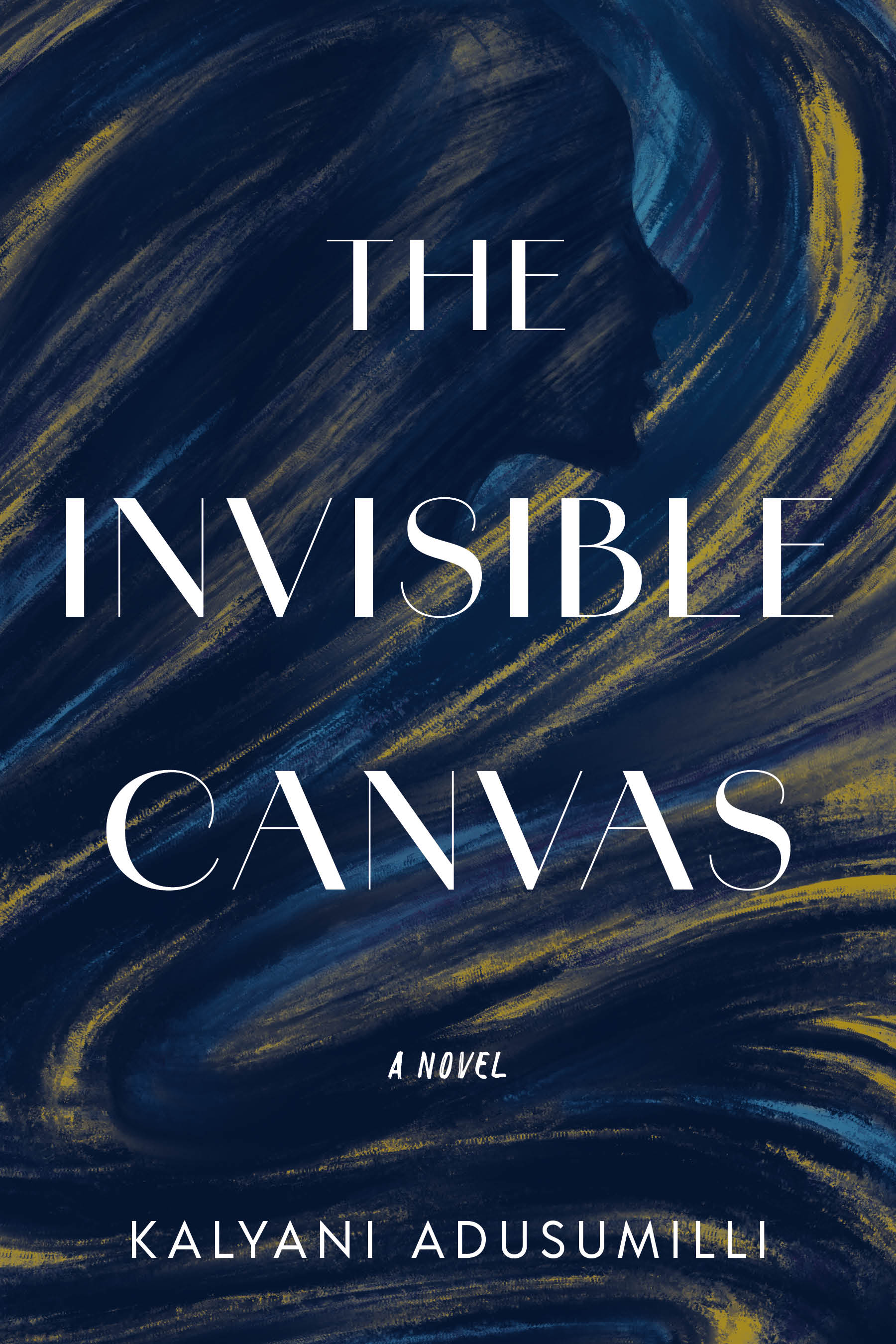
The Invisible Canvas: Review Summary
The Invisible Canvas marks an encouraging debut from Kalyani Adusumilli. It tackles difficult subjects and themes such as surviving childhood abuse, the immigrant experience, cultural conflict and the expectations place upon women. It is the story of Jansi, an Indian-American woman who has reached a crisis point as the burdens of her life have become more than her mental health can withstand.
This review will provide an insight into the plot of The Invisible Canvas, some thoughts on one of its major themes and what I thought were its strengths and weaknesses. Overall, a well-written debut with a relatable, inspiring story, The Invisible Canvas will be released on 26 May 2026.
The Invisible Canvas: Plot Overview
When Jansi wakes up in hospital, it does not take her long to recall how she came to be there. Overwhelmed by guilt and shame she apologies profusely to her husband, Dev. She says she did not mean to do it, she wants to live, but for now she has to stay in the ICU under a psychiatric watch.
Jansi had endured a difficult night. Her elderly father and driven off in his car and not returned. Her mother, Padma, was indifferent and did not even notice he was absent. He is eventually found by the port authority when he had run out of gas.
There had been signs of her father’s mental decline and that something like this might happen, but this was the first time something this extreme had occurred. She brings her father back to his home but Padma remains dismissive and, if anything, blames Jansi.
Something inside Jansi snaps. A middle-aged woman balancing the daily stresses of marriage, motherhood and career, she has also been weighed down by extra burdens.
Sitting alone on her bed that night, Jansi felt the crushing ache settle in her chest like a storm brewing beneath the surface. The house was quiet, unnervingly so. The calm allowed her mind to wander, circling memories she had tried to keep at bay. For a moment, the silence felt like a thin veil—protective yet fragile—over the tempest she carried inside. Each frustration, each unspoken resentment, crashed over her like a wave, pulling her further under.
The grief for her aunt.
The unearthed shame from her childhood.
The devastating hole left by her sister.
The helplessness over her father.
The endless criticism from her mother.
It had all wrapped around Jansi like heavy chains as the tears welled up, a silent protest against the weight she could no longer contain.
Returning home in a trance, she downs some wine and a bottle of prescription medication, realising too late what she has done.
In the ICU, Jansi is horrified and humiliated to be on suicide watch and ashamed to have put herself above her love for her husband and children. She hopes her psychological examination will clear her to go home soon. Her husband and cousin, Neela – a doctor – are there for support, but it is decided she is to be transferred to a mental health facility.
Jansi and her husband settle on a high-end private health centre on the outskirts of Houston. The prospect only adds more guilt for Jansi. Her family have to manage four weeks her at a high cost. She fears what her in-laws will think, what her mother will think.
Arriving at the centre, she is further shocked that it looks like a mental hospital. She is told the facility is built to cater for a range of different patient needs but Dev and Neela still need to convince her to stay for the four weeks of her program.
Despite the fear, frustration, anger, guilt and bitterness, Jansi has to learn to accept her situation and the difficult idea that she can only best help her family by first getting help for herself.
She had been living hidden in the shadow of others—defined by her mother’s demands, her father’s concessions, even Anya’s brilliance. Beyond survival, beyond keeping the peace, beyond playing the role they’d assigned her—it was time to ask what she wanted.
But what do I want? she thought.
Later, when her notebook lay open before her, the pen hovered before pressing down, as though naming the truth would make it real.
The Invisible Canvas: A Solid Debut from Kalyani Adusumilli
In the Q&A section at the back of The Invisible Canvas, author Kalyani Adusumilli says that she was inspired to write her debut novel about the impact of remaining silent and the impact of breaking silence; of immigrant family dynamics; mental health stigma amongst South Asians and that she wanted to write moving well-told story.
In this, I would say Adusumilli has largely succeeded. The story of Jansi is one that many readers will relate to – of childhood trauma, the immigrant experience, cultural differences, difficult parent-child relationships, grieving for loss, work-life balance dilemmas and issues of mental health and wellness.
The Invisible Canvas Key Theme: South Asian Stigma and Cultural Conflict
There is considerable stigma surrounding health issues within South Asia culture. Health is treated as deeply personal and often medical conditions and histories are not even shared within families. This is more true with mental health.
The contrast between Jansi’s two worlds suddenly hit her like a tidal wave. In America, she had found space to confront her trauma. She could speak freely—about the abuse, the nightmares, the pain. Back in India, such conversations were forbidden. She recalled Asha’s voice, thick with sorrow. Even now, the cultural shackles still bound her family.
But Jansi could feel them loosening.
The stigma is a major source of shame and anxiety for Jansi. Early in her recovery she can think of little else than how to hide her condition from the rest of her family including her own mother.
What will my in-laws think? she worried. And worse… what will Mom say? The stigma surrounding therapy in the Indian community loomed large in her mind, adding another layer of shame. How could she possibly navigate the labyrinth of cultural expectations around preserving familial honour?
It is part of the subtle cultural conflict of the novel. The relative openness to discussing mental health issues in Western culture contrasted with the prevailing silence of South Asian culture. A difference also exists by generation and upbringing. In the novel, the younger and more Westernised characters are more accepting of sharing their difficulties and treatment openly.
How can they be so open? Jansi wondered. Aren’t they scared of . . . of being judged?
Besides the contrasting attitudes to health, the novel has other things to say about the cultural differences. Coming from a South Asian family that emigrated to the West myself, I think the novel does show that such families are far from all-alike. They vary greatly in their level of assimilation to Western culture, their methods towards raising their children, religious adherence and which aspects of their home culture they cling to or dispose of.
That being said, it was a little surprising that the novel is practically devoid of references to religion or spirituality. The families and their individual members are living a largely secular Western life.
As well as having to accept a more Western attitude towards her treatment, Jansi is also encouraged to embrace a very American moral of following her passions. It is a concept that, I believe, should be accompanied with some important conditions and nuances but the novel does not go there and maybe doesn’t need to.
The silence pervading sexual abuse unfortunately transcends culture and the West can hardly make a claim to having made great progress in this regard.
Another Thought: Doctors Make Bad Patients
It is often said that doctors are very poor at recognising or accepting health issues amongst themselves. I also like to add that it is worth remembering that doctors are not scientists. We see some of this at work in The Invisible Canvas.
Despite being a doctor, Jansi’s mother Padma is oblivious to the mental health struggles of her husband and daughter. In retirement she has also turned to ayurvedic medicine – a system of Indian traditional medicine for which evidence is mixed at best and can be dangerous at worst (for more information see Singh and Ernst’s excellent Trick or Treatment).
Padma’s contradictions and what they say about her and potentially her profession, were a point of interest for me but are not a major theme in the novel so are not necessarily given much focus.
The Invisible Canvas: Minor Quibbles
I have a lot of minor quibbles about this novel but they could all be said to fall under one general umbrella – that it is too easy going. The novel is a bit flat. There are not really any surprises and only a few large conflicts.
Jansi’s interactions with her therapist while in treatment are emblematic. They are very agreeable. Jansi does not react with a patient’s typical responses to being challenged on her ideas of herself or her choices. Rather than being defensive, resistant to change or in denial, once she overcomes her initial hesitancy she is mostly very receptive to what her therapist has to say and he becomes almost a narrator in her story as much as her healer.
In an ideal world we should not be dismissive of childhood abuse, grieving for the dead, the burdens of expectation placed on women and the colliding of difficulties on several fronts that occurs with middle-age. But this is fiction and the reader needs to be challenged as well. The characters in The Invisible Canvas were just a little too ordinary to be interesting and the plot a little too placid to be exciting.
The nearest it came to stirring me was around the cruelty of Jansi’s mother Padma. Knowing Jansi would have to come to terms with it and face her mother, attempting to change their relationship at the risk of destroying it, is the most difficult challenge Jansi faces. But this too felt a bit too polished when I wanted the messiness of realism.
The Invisible Canvas: An Inspirational Story
The other side of finding Jansi’s situation a little ordinary is that it is potentially very relatable. I am certain plenty of readers will know and understand the challenges she faces and will enjoy the strength she shows to embrace change and discover a path to a healthy future.
I readily admit that I too was caught up in this. Despite my quibbles, in the last section of the novel, I could not help but cheer Jansi on. I could not help but take some inspiration from Jansi’s story.
The Invisible Canvas: Review Conclusion
The Invisible Canvas is a solid debut novel from Kalyani Adusumilli. She writes with skill in handling the back-and-forth timelines of Jansi’s life story and her novel’s themes of cultural differences, family relationships and the expectations place on women.
I might have liked to see her other characters coloured in more, a plot that had more bumps and turns and more for the reader to try to understand and figure out themselves. Generally, for everything to be given a good shaking up.
But The Invisible Canvas has considerable heart as well. What might seem conventional is also very relatable. In Jansi’s story the reader can take hope in a midlife renewal; that even the most damaged of relationships can be mended for the better and that the past need not be prologue.
The Invisible Canvas will be published on May 26 2026. We Need to Talk About Books was supplied with an advanced copy in return for an independent review.
 We Need to Talk About Books