
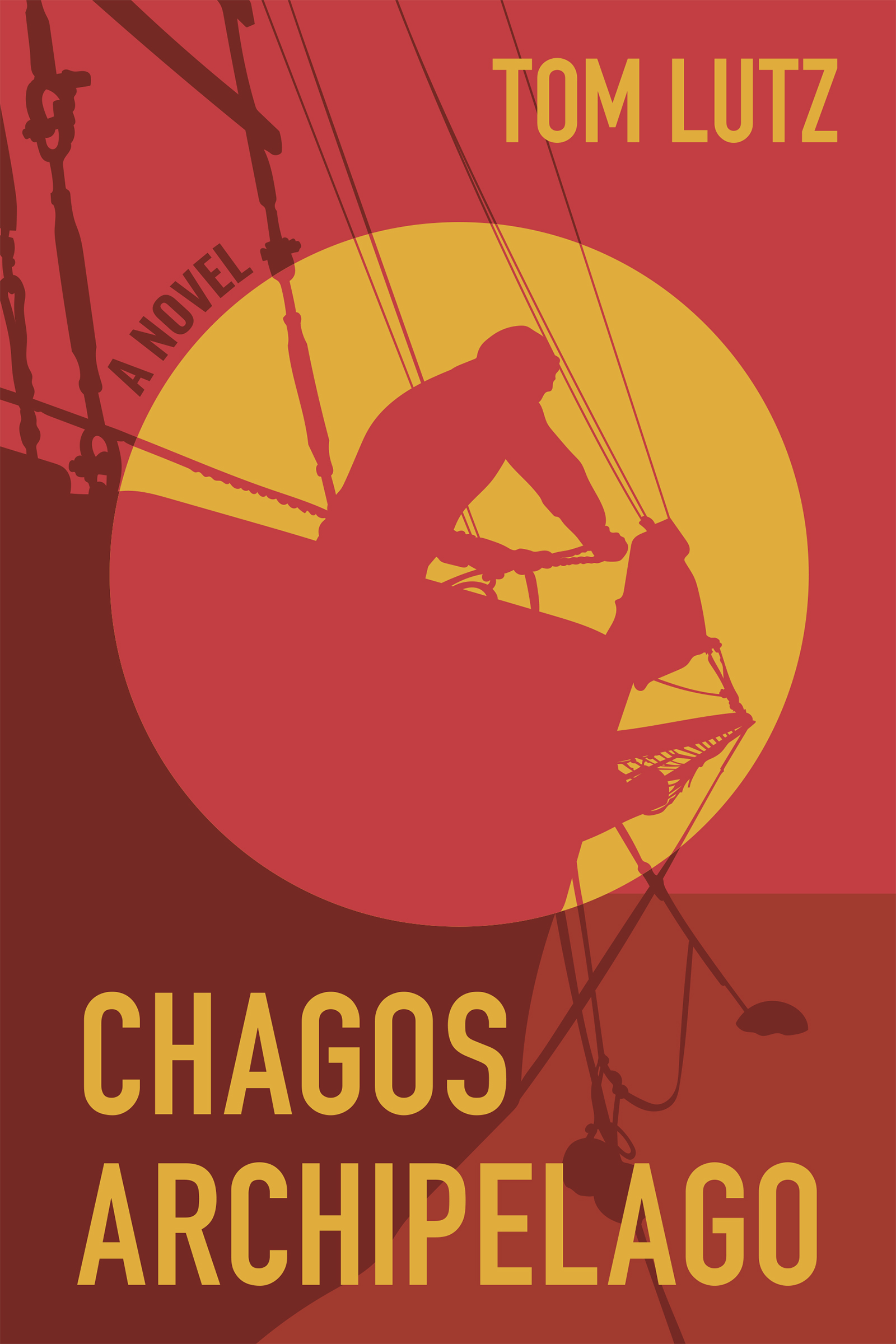
Tom Lutz’s Chagos Archipelago is a geopolitical thriller that uses isolation – geographical, emotional, and moral – to colour the action. Set amid the contested islands of the Indian Ocean, the novel draws together four displaced lives whose private crises unfold against the vast machinery of corporate power, espionage, and modern imperialism. Lutz utilises unmoored characters: a manipulative covert operative, a drifting sailor, a reluctant assassin, and a disgraced legionnaire. As their stories converge, Chagos Archipelago reveals itself not just as a tale of intrigue, but as a meditation on how power now operates in a world where nations recede and corporations wage war in their place.
Skye is a young American woman from near New York. An ethnographer, she has arrived in Mauritius to join a French scientific expedition. She is, however, not part of the original expedition, nor does her line of work correspond well with the mission. Nevertheless, she is skilled enough at manipulating people and taking advantage of the fact that they underestimate her to get herself a place onboard the ship.
In college all her classmates were feminists out to smash the patriarchy, and she was just a little embarrassed—although she never admitted it to anyone—that part of her felt that the patriarchy was much easier to manipulate than an equitable system would be. Men’s presumptions of power always worked to her benefit. Men’s underestimation of her gave her vast arenas of manoeuvrability. Men’s assumption that she didn’t know what she was doing allowed her to do exactly what she wanted. Patriarchy, and the ideological blinders of patriarchy, were the foundation on which she built her power. Her classmates only read female authors. She read the males, the dead, white males. Conrad, Machiavelli, Greene, and Amis were her guides to power, not Virginia Woolf. She didn’t want to smash the patriarchy, she wanted to outpace it. If that meant she smashed a couple of patriarchs along the way, all the better.
Once aboard though, she is not the only one who seems out of place.
Skirting the Indian Ocean is Frank Baltimore. Alone on a beautiful morning, onboard his 72-foot ketch, lying in a hammock after a perfect breakfast with all the world’s literature on his kindle, Frank feels he is in paradise. Only he isn’t enjoying it as he should. Strangely, after seeking the peace of isolation at sea, he finds himself yearning for land and even human company.
Frank has sought this isolation after events further back east. Embarrassingly, he embarked on an affair with his best friend’s wife who did not reciprocate his feelings and left Frank feeling that he had deluded himself. Worse, his best friend, Dimitry, is not one to mess with. A money-launderer for dictators and drug lords, Dimitry also skimmed off the top for himself. When discovered, he bombed his own offices in Taipei, killing his coworkers, and went into hiding.
Frank finds an exclusive resort he can sail to and leaves paradise to see if he can find what he wants there.
Staying at the resort is Mónica, taking the first holiday of her life. At a young age she found herself in prison after being found guilty of the murder of her stepfather. She was discovered there by Eamon. As corny as she knows the story sounds, Eamon arranged for her to watch La Femme Nikita and asked her if a life like that appealed to her.
Eamon got Mónica out of prison on a technicality and has been her handler ever since. Sending her around the world as an assassin. She is excellent at her job but is not so naïve as to believe she can continue it for long. Assassins don’t usually get to plan for retirement. It is only a matter of time before her knowledge becomes too much of a liability and her sudden decision to take break has unnerved Eamon.
Sitting alone on a tiny island in the Indian Ocean is Alain, who has made a mess of his life. Originally from Madagascar, Alain had an affair with his son’s schoolteacher who is now pregnant. Needing to escape the shame, judgement and wrath, without escaping his responsibilities, he did what any desperate man in a former French colony would do – he joined the French Foreign Legion.
He loathed the racism he experienced in France and now he has been stationed alone to defend a tiny speck of land in a vast ocean. But he is reluctantly grateful for the training which might lead to other opportunities and even the isolation has granted him some peace and space to think.
One day a ship arrives and launches a boat to his island. It is the French oceanographic survey he was expecting. On the boat is a French scientist who is to remain on the island some weeks and an American woman. Alain spots her adding equipment behind the backs of the scientist and the sailors and she spots him observing.
Skye senses she and Alain have an understanding. She introduces herself and asks Alain if he wants out. She tells him she can get him out of the French Legion, get him a new identity, county, job and plenty of money for his responsibilities. Alain is in no position to say no to any opportunity even if he does not believe Skye can do what she promises. She asks him to replace the memory cards in her devices every 48 hours and to be ready to leave when she returns.
These four – Skye, Frank, Mónica and Alain – come from very different backgrounds yet have much in common. Each have found themselves in a life situation where they are alone and required to rely only on themselves. Each are not free but subjects of much more powerful forces. And once they come together, they will have do something neither are accustomed to – and put their trust in someone else.
Chagos Archipelago by Tom Lutz is a follow up to his earlier novel Born Slippy which also features the characters Frank and Dimitry. Though it has been described as a crime novel, I think it is more of an espionage novel. Some elements of the plot might remind readers of Tom Clancy or Ian Fleming.
That might need some explaining as I have spent the above describing the four main characters rather than the plot. The remote Indian Ocean islands of the Chagos Archipelago have a torrid history of French and British colonialism, American dependency, thwarted independence, illegal occupation and complex ethnogenesis. Like so many otherwise unlikely parts of the world, they are pawns in the power games of the superpowers.
The islands are also under threat by climate change. On a reef, a man-made island has been constructed to harness tidal energy to produce electricity to power nearby islands. But as Skye explains to Alain, the project is just a front for the construction of a military base. Skye works for a competing military-industrial corporation. Their CFO has recently been assassinated in an escalation of the war between the rivals.
The threat to world peace, the utilisation of unprecedented technology, wielded not by a powerful nation but by international super criminals, where saving the world will be in the hands of a few secret operatives, will be where readers get the feel of Clancy and Fleming
But Chagos Archipelago also places itself well into the twenty-first century. The frontline of the war between powerful nations has shifted. It is not between the nations themselves directly. Nor is it between their intelligence agencies covertly. War has now been completely outsourced to the corporations who provide military technology, who subcontract to commit crimes and spread corruption. Corporations who have been granted the same protection from the law given to covert operatives (as long as they do not get caught). Corporations who are not subject the democratic scrutiny as goes for everything under the blanket of ‘national security’. Corporations who are not necessarily loyal to the nations they serve or the operatives who commit crimes for them but only to their investors.
“Anyway, [we want] to annihilate this rival company, I get that. And I’m starting to understand that it’s all like a Mafia movie. You go onto someone’s turf and there’s gangster wars. We’re in a gangster war. But who is the law? It’s Chagos Archipelago, so UK says it’s UK, Mauritius says it’s Mauritius, and America runs everything from Diego Garcia. So, who is the law? Doesn’t somebody, eventually, come and break up the fight? Doesn’t the other company go to Interpol, or the UN, or EU, and get help?”
The story of Chagos Archipelago is told from the first-person perspective of the four main characters, each taking a chapter in turn. As well as the four having much in common together, Frank have Alain have a lot in common as they are both fleeing affairs. Their encounters with Mónica and Skye respectively bring out their difficulties in trusting women. Mónica and Skye too are much alike though Mónica works alone and is not as skilled with people as Skye. It does mean there is a lot of sameness to the characters for the reader.
Some parts to the story will also strain credulity for the reader. Futuristic technology, unlikely coincidences, almost-miraculous escapes from death and recovery. But this is par for the course for novels and films of this genre.
Chagos Archipelago will appeal to fans of morally-ambiguous, geopolitical thrillers. It has taken the successful formula for such fiction and transplanted it into our contemporary paradigm. One where it is unclear who the real villains are much less what they are engaged in. We can expect Lutz to develop this story and the characters in future instalments.
 We Need to Talk About Books
I’m not a reader of this genre, nor do I watch the films they spawn, but I found it interesting to read the character outlines in your review, and I’ve got increased respect for the imaginative minds behind these sorts of books.
LikeLike
I’m not a reader of this genre either (although I do think I will read some John le Carré one day). What really kept me going was the characters. By doing a chapter from each character’s point of view in turn, with each new chapter I found myself keen to get back to a character I had not heard from for three chapters.
LikeLiked by 1 person