
James Fenimore Cooper’s The Last of the Mohicans (1826) is one of the most enduring works of early American literature, often cited as a defining example of the nation’s emerging voice in fiction. Set during the French and Indian War, it blends adventure, history, and romanticism against the backdrop of the North American frontier. It portrays the brutal realities of war as well as the deep cultural and moral conflicts at the heart of early America and is considered a classic that has become a staple of university reading lists.
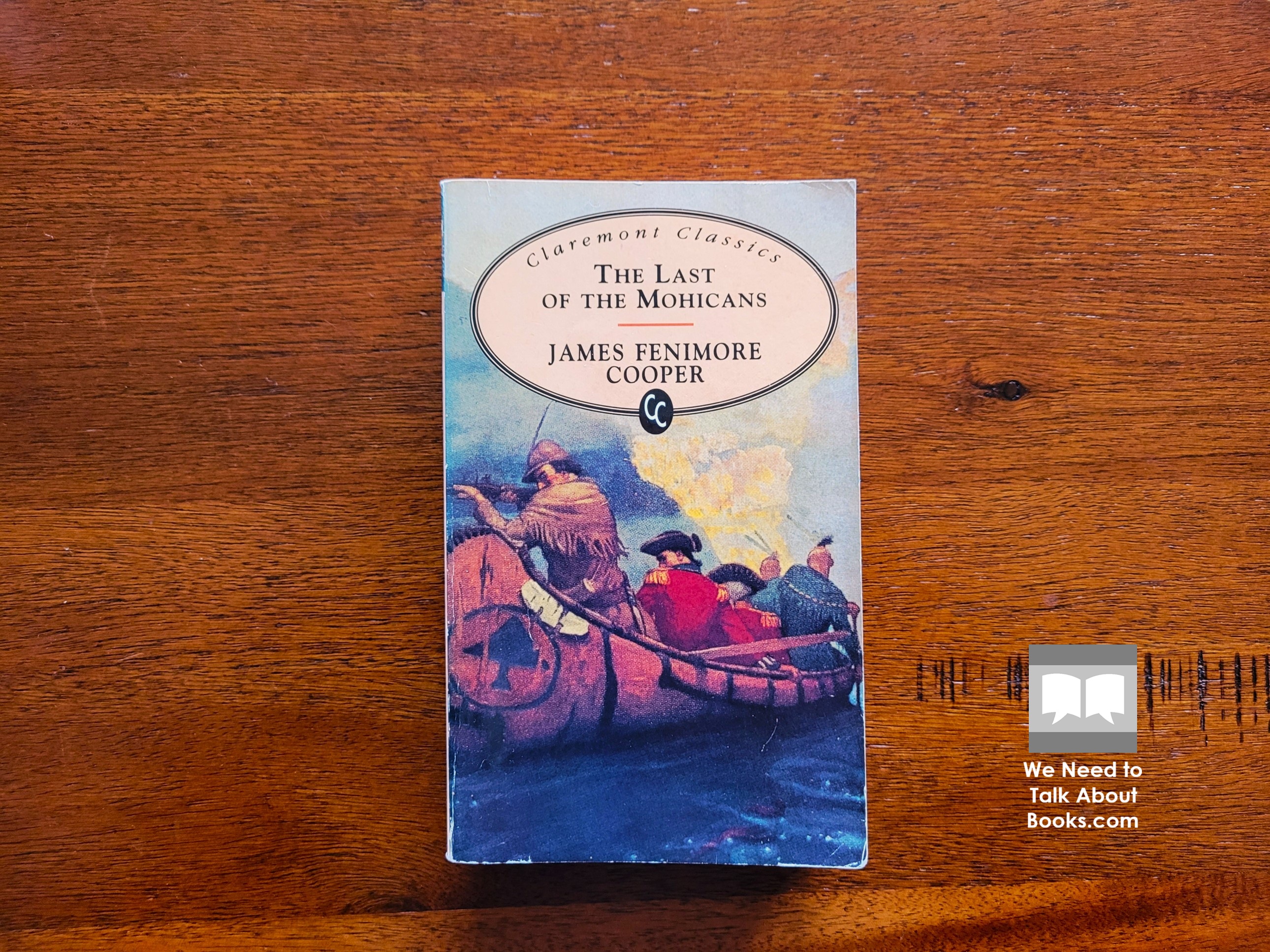
In 1757, in the midst of the French and Indian War, as France and Britain battle for supremacy in North America, two women make a perilous journey through the warzone. Alice and Cora are daughters of Lieutenant Colonel Munro who is stationed at Fort William Henry. They are to be accompanied by Major Heyward, a young officer. To their surprise, their guide is to be a Native American named Magua. David Gamut, a singing teacher, also joins their party.
Alice, the younger sister, is distrusting of Magua while her maturer sister Cora questions, given they know almost nothing of him, if it is right to distrust him simply because of his manners and skin colour. However, the party’s confidence in Magua suffers as he takes them by a route he insists is faster and safer though not one soldiers would take.
Late in the day, they come across three men near a stream. Chingachgook and his son Uncas are members of the Mohican tribe. With them is Hawkeye, a white man who grew up among the Delaware Indians. He is foster brother to Chingachgook and known for his marksmanship. The Mohicans were once a victorious and successful tribe brought low and lost their land after the introduction of alcohol by the Dutch. Chingachgook and Uncas are in fact the last of this once great tribe.
The three share Heward’s doubts about Magua and question his loyalty and motives. Magua makes a run for it and is wounded but is allowed to escape. Hawkeye and the Mohicans agree to guide the party to Fort William Henry provided they keep the routes they use secret.
Although Hawkeye and the Mohicans do their best to thwart trackers and keep their charges safe, they are eventually found and cornered by a group led by Magua. Facing capture and possible death, Heyward convinces Hawkeye and the Mohicans to save themselves. Heyward, Gamut and the Munro sisters will be safe as they are too valuable as prisoners to be harmed. Meanwhile, Hawkeye Chingachgook and Uncas can work to rescue them.
Heyward, Gamut and the sisters are captured by Magua. No longer needing his pretence, they learn that Magua is a Huron and is descended from a line of chiefs. He fell into disgrace after becoming an alcoholic for which he blames the sister’s father. Though allied to the French, Magua has his own agenda of revenge against Lieutenant Colonel Munro.
Though they are soon rescued by Hawkeye and the Mohicans, their journey becomes even more perilous as the group navigates the warzone between British and French lines while being hunted by Magua and his Hurons.
The Last of the Mohicans ended up on my reading list as a book recommended by my wife. She read it in university as part of a course on early American literature. It remains a popular text in such courses alongside Moby Dick, The Scarlett Letter and the works of Mark Twain.
The novel ebbs and flows. Some parts are action-packed. Some held in suspense and tension. Others proceed much slower.
The novel is also about a lot more that the plot and characters. Descriptions of the region the characters navigate and recollections of historical events that have occurred there, serve to romanticise the colonial and frontier period in a clear appeal to Cooper’s American audience. The novel also explores interracial social dynamics, both romantic and non-romantic.
Loyalty, is a key theme. Character’s loyalty to their race, their nation, their tribe, to the past and the dead or to the present and the living are tested by the events and circumstances in the novel. Those circumstances being the clash of civilisations and of a culture in seemingly terminal decline. Even without this conflict between cultures, within each culture traditions and ideology are found to lack guidance for the present situation.
As much as my wife enjoyed this novel as a student, I could not say that I did a great deal. Partly this was the fault of the Claremont Classics edition I read. It lacks any explanatory notes and the French passages are left untranslated. Partly it was due to Cooper’s shifts in tempo which resulted in shifts in my interest in the story.
But it was also due to Cooper’s style of writing. It is not merely aspects that could be ascribed to writing in the nineteenth century, which I usually enjoy. Far from succinct, his style is very indirect and unnecessarily roundabout. Little things annoyed me, like how each character might be known by several names but he won’t settle on one for each in dialogue but will keep switching which he uses.
The novel has been adapted several times. I watched the 1992 Michael Mann film starring Daniel Day-Lewis. The film differs significantly from the novel and is derived more from a 1936 film adaptation. The film does not emphasise the themes described above and instead adds a strong romantic subplot.
It is therefore not a suitable vehicle for readers who enjoyed the novel to see scenes and characters from it brought to life. It feels more at home amongst the action-adventure films that feature historical and romantic elements that were popular in the 1980’s and 90’s – Raiders of the Lost Ark, Romancing the Stone, Dances with Wolves, Braveheart – for example.
The Last of the Mohicans remains a significant work in the canon of early American literature. The novel captures the tension between civilisation and wilderness, and the clash between civilisations in ascent and decline and the incumbent violence and exploitation. But the novel’s dated prose style, uneven pacing, and linguistic choices hindered my enjoyment. Ultimately, The Last of the Mohicans endures as a work to be studied and respected if not enjoyed—a cornerstone of American Romanticism even if some aspects of its appeal have faded with time.
 We Need to Talk About Books
This is one of those books that I’ve known about for a long time but never encountered anyone who’d read it!
LikeLiked by 1 person
This sounds like a list you should post “Well-Read Novels Yet I’ve Never Encountered Anyone Who Has Read Them!” Thanks for stopping by 🙂
LikeLike
I’ve read a few books by Cooper and have enjoyed but not LOVED them. Deerslayer was a better read in my opinion.
LikeLiked by 1 person
Thanks for sharing!
LikeLike