
The Hintons have enjoyed a peaceful existence in British India. But with their sons growing up, an inevitable need for change dawns on the American missionary family. It forces them to take stock of their time in India. To question their original purpose and what they have achieved. When their only friend and greatest supporter takes shelter with them after a political scandal, it exposes tensions of mission and morality. Conflicts whose existence they had not acknowledged.
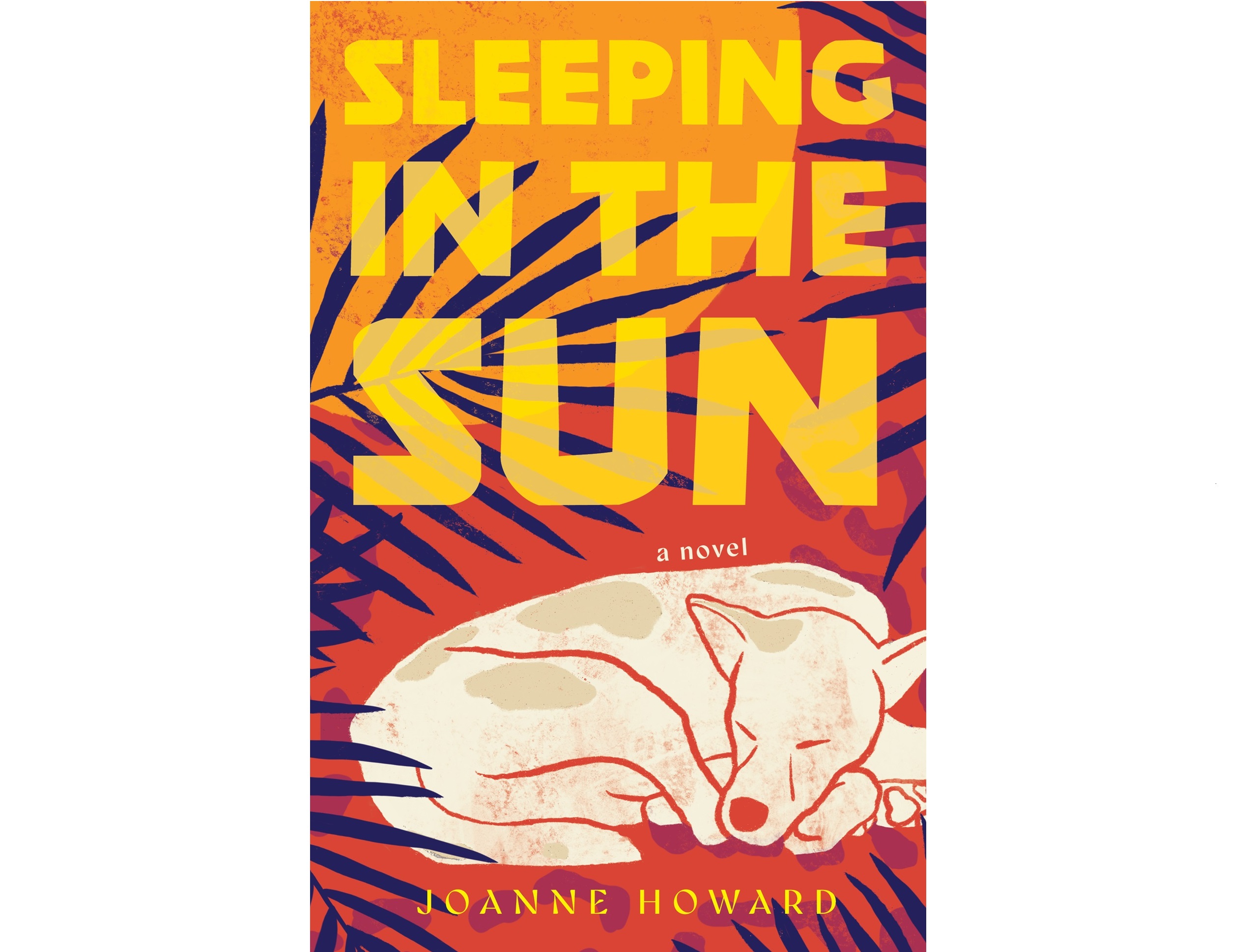
With a title like ‘Sleeping in the Sun’ readers may be forgiven for expecting a story of lazy days spent in a hot climate while the events of world pass by. The Hinton family may be guilty of having slid into a comfortable hammock and lain there too long. The husband and wife and their four sons are a family of American Baptist missionaries and have been living in British India for a long time. Their youngest son, Gene, was born there and knows nowhere else.
They can count the inhabitants of a small village as their converts to Christianity. But that was achieved a long time ago and of the money that feeds their collection plate, none goes to new mission work. They have never managed to make any true friends of either the locals or among the ruling British. They live in relative comfort and seclusion in their ‘big house’. Their main Indian servant, who they call by his converted name – Arthur – lives in a hut outside.
They were well known as that family of Baptists, but over the years, they hadn’t ever managed to grow close with anyone. They had relied too much on their apparent need to “stick together,” as John had said, instead of making any personal connections. Ved was the closest thing Gene had to a friend, but even then he’d always felt the pressure to appear as the padre’s son, never being himself—with anyone. In fact, the only person he’d ever been his real self with, however briefly, was Arthur.
It all makes the young, precocious Gene question what they are even doing in India.
But change is increasingly being forced upon the Hintons. The Hinton’s sons are growing up and the plan was always to return to America for their higher education. Which may be another reason their commitment to their mission work has eroded. Meanwhile, Indian Independence movement is now decades-old and some locals have lost patience with Gandhi’s nonviolent tactics and are calling from a more aggressive approach. They are not inclined to distinguish between British and American among them.
Arthur too feels the need for change. He has been the Hinton’s servant for many years. It is the only employment he has known since leaving his parent’s home when he was barely a man. Now nearing middle age and unmarried, a friend has recently suggested that he may have a suitable bride for Arthur from among his relatives. But Arthur wonders why he has never heard of this eligible relative of his friend’s.
Then Jaya arrives at the Hinton’s house. It is not unusual for young women fleeing domestic violence, forced marriage or unwanted pregnancy to seek shelter with the missionaries. But Arthur is disturbed by the arrival of Jaya for reasons he does not understand.
Her arrival coincides with another guest staying at the Hinton’s – Judge Ellis. The Judge is the closest person the Hinton’s have to a friend in India. He was enormously helpful when they first arrived. It is fair to say they never would have survived much less thrived as they have without the considerable assistance provided by the Judge and the boys have a great affection for him.
But with his overbearing character, firm opinions and racist outlook he is a somewhat awkward friend for a missionary family to accommodate. The boys are not so young that they easily accept their parent’s story that the Judge is vacationing with them having completed a trip to South Africa.
For Arthur the Judge represents a serious flaw in the Hinton’s life. How can people whose mission it is to spread the moral teachings of their religion be friends with someone of so obviously ugly character? Soon Arthur is questioning much more about his life, his choices and his relationship with the Hintons.
Sleeping in the Sun is the debut novel by Joanne Howard inspired by her grandfather’s experience as a Christian missionary in India. Perhaps too far removed from that time and culture, Howard acknowledges the help of her research and a sensitivity reader.
I don’t feel there is a dominant theme in Sleeping in the Sun, rather several that are in play. Colonialism is inevitably on trial in a novel set in this period. The main agent of this in the novel is Judge Ellis. Through him we see power and privilege abused, accountability denied and justice prevented. We also see the racism that informs the decision-making behind such perversions.
The Hintons, being American, are not part of the colonial power. But as missionaries, their purpose in India is a form of soft colonialism. Though better intentioned in its motives and more benign in its effect, it is also predicated on beliefs that are difficult to defend when viewed from a distance.
Gene is our principal witness from the colonist’s side of the divide. The results of his contemplations are scepticism for the racism at the heart of the colonial ideology, disillusionment for its purpose and guilt at its results.
On the other side is Arthur. Part of Gene’s guilt is about how his family treats Arthur who has been with them for Gene’s entire life. Familiarity has bred contempt and the more Arthur does for the Hintons the less they think of him. Observing Judge Ellis and encountering Jaya, Arthur is surprised at how easily he went to sleep and accepted the merits of his situation without question. He saw the benefits to himself and neglected the costs. His awakening is not unlike India’s though several decades later in emerging.
And he told her everything, not just about that morning but about the afternoon too, about the things he’d finally realized about the Hintons, how they were no better than the friends they kept; how the judge was back in the house as though nothing had happened; how perhaps they didn’t need him, Arthur, anymore; how all the years he’d worked for them had been for nothing. They would never care about him or the people they so righteously “helped,” and they likely never had.
Another way the contrast is shown in the novel is through nature and Sleeping in the Sun includes animal characters. For Arthur, the natural world is his refuge from his daily life. He ventures there to meditate, find peace and feel cleansed. For the Judge, nature is yet another thing that exists only for his pleasure and exploitation.
That night, under a ponderous sky, Arthur returned to the pools along the same trail they had all walked that afternoon. He couldn’t remember the exact location the judge had shot the leopard; it had all been so sudden. But it had been right from this path, and he knew he would come to it. He tried to feel something, to sense a change in the jungle, but all felt how it had before. He realized that the leopard was still out here, too wounded to go very far after its initial frenzied escape. Uneager to let the thought fester into fear, he quickened his pace. He thought only of the water, the cool relief, the weightless feeling. In no time, he emerged from the trees and came to the pools, still and patient as though they had been waiting for him. Slowly he removed his clothes, hung them on a nearby branch, and fished a small pumice stone out of the pocket of his trousers. It was his usual custom to wash his clothing first and then his body, but on hard days, he found that his body could not wait to be cleansed back to its original state.
There is plenty more in the novel for the reader to contemplate. The role of violence in revolution. The sources of poverty and its impact on ordinary people. The role of women and norms of marriage in India. Gene’s relationships with his elder siblings. Mr Hinton’s Christianity is a curiosity as well. Another sign of a slide into loss of perspective and purpose. But I leave these for readers to explore themselves.
Sleeping in the Sun is an impressive debut from Howard. It will appeal to readers who enjoy novels set in the complex and turbulent period of late colonial India such as the novels of Paul Scott. Howard explores her themes with a certain subtlety and restraint but with no less drama.
Sleeping in the Sun will be published on October 22 2024. Author Joanne Howard’s publicist provided WeNeedToTalkAboutBooks with an advanced copy in return for an independent review.
 We Need to Talk About Books
This is interesting. I had not known that there were American missionaries in British India and part of the machinery of colonialism.
LikeLike
Yes, that is what made it interesting to me. I think the main American aspect – as far as this novel and its characters are concerned – is that they don’t feel part of the British establishment for understandable reasons, but as far as most Indians were concerned, they are all part of the same machinery.
LikeLike
Yes, because they were trying to impose their own religious beliefs on the Indians, with the implication that they were superior.
Missionaries (Irish, French, German, American &c) did the same thing here in Australia during the colonisation period.
LikeLike
Great review!
LikeLiked by 1 person
Thanks! Glad you liked it
LikeLiked by 1 person
I found the relationship between Jaya and Arthur unlikely. That she would return to the pools to meet Arthur after dark from Calcutta is hard to believe.
LikeLiked by 1 person
That is fair. She is a bit of an enigma. Although we are given no reason not to trust her version of her history, her motives or that she is acting alone; her methods prove very effective in recruiting Arthur. Things might get more intriguing if we were led to challenge those assumptions.
LikeLike