
The historical-fantasy novel, Conquist is the latest offering from Australian short story writer and fantasy novelist Dirk Strasser. Strasser is the author of more than thirty books including The Books of Ascension fantasy series. His novels have been translated into several languages and he has won multiple Australian Publisher Association Awards.
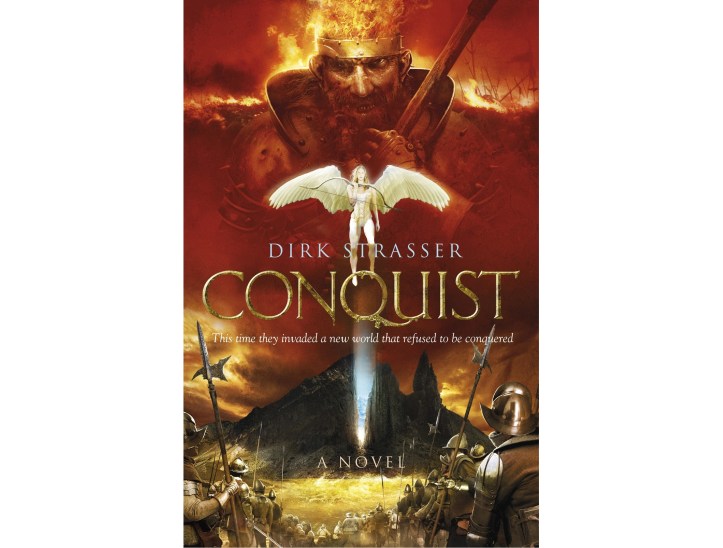
Conquist is set in South America, 1538, where a conquistador is driven by the dual desires to capture land and gold for the Spanish crown and to make a name for himself, alongside other great conquerors of the era. These desires lead him and his followers through a one-way portal into another world where they are faced with two implacable enemies.
The novel opens with Capital Cristobal de Varga, leader of 600-man contingent of conquistadors, plundering Machu Picchu and felling its Incan inhabitants. However, the spoils of gold and jewellery are paltry compared to their expectations, as they discover that the citadel of Machu Picchu is merely an outpost of the Incan Empire while the bulk of Incan wealth are with the emperor, Manco Inca, in the hidden city of Vilcabamba. Aligned with Incan nobles, scheming Huarcay and his alluring sister, Sarpay, de Varga leads his men in a lengthy pursuit of the Incan emperor that takes a dangerous turn when they stumble upon a portal into a new land. This portal provides one way entry only, leaving de Varga and his men trapped in a harsh and hostile world.
Within this new world, promptly claimed for Spain by de Varga, the conquistadors find themselves caught in a longstanding hostility between the Ñakaqs, described as ‘hideous, misshapen, wild-bearded men in armour’ who wear helmets with shooting flames and the Duendes, beautiful, winged women with golden hair and shimmering smooth skin. The appearance of these divergent foes leads the Spanish to assume that they are seeing angels and demons, and possibly that they have entered Hell. However, the conquistadors soon discover that appearances can be deceptive and trust must be carefully placed.
Amongst de Varga’s contingent is the steadfast Padre Núñez; a character who is intent on baptising as many of the inhabitants of New Spain as he can, spreading Christianity and obliterating the Incan’s pagan practices that include communing with the mummified remains of ancestors and treating them as still living. Here Strasser effectively blends historical research into his story, highlighting the cultural conflict between the coloniser and colonised.
Strasser employs third person narration throughout the novel, however, a point of interest are the interspersed diary entries from de Varga. These entries facilitate introspection from the protagonist, providing insight into his doubts, questions and reflections. Through these entries, Strasser offers contemporary commentary on colonialism and its consequences.
No, I know when my tale took flight. It began when I first tasted the acrid sweetness of conquest, the day I fully experienced the florid symptoms of a conquistador’s disease. It was the day many innocents perished in the grip of our contagion. It was the day we sacked Machu Picchu.
Conquist is swiftly paced and filled with action and political intrigue. Captain de Varga is misled and betrayed by those around him as he shoulders the weight of leadership, his responsibility for the lives of others, and his desire for wealth and renown. As a reader who does not typically engage with the fantasy genre, I found Conquist to be very accessible and the historical elements made it more enjoyable for me. Strasser has already turned his novel into a screenplay, and I can certainly see the great potential for this novel to be successfully adapted for the screen. Ultimately, fans of the fantasy genre will find much to enjoy in Conquist.
Conquist is released this week – from September 1 2024. The publicist provided We Need To Talk About Books with an advanced copy in return for an independent review.
 We Need to Talk About Books