
After delving into Catton’s previous Booker Prize winning novel The Luminaries, I approached Birnam Wood with high expectations that it would be similar in the intricacy of plot and breadth of characters. However, Catton’s follow-up novel is strikingly different in style and has a more concentrated focus on characters and their stories. It is a thrilling psychological narrative that explores the dichotomy between those who devote their life to the protection of the environment and those who exploit it, those who live their values and those who driven by self-interest.
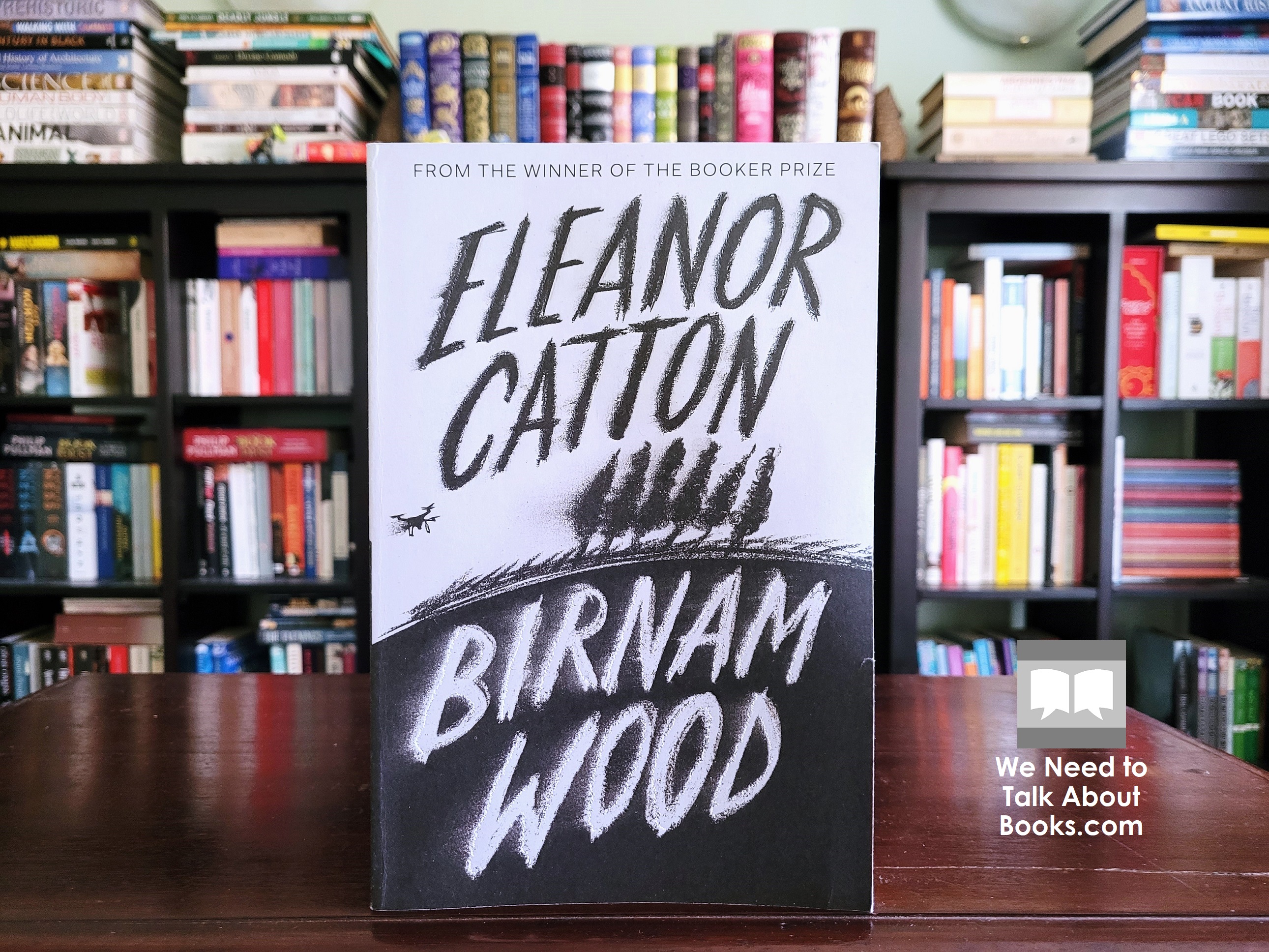
Set in modern day New Zealand’s South Island, the novel opens with a deadly landslide along the Korowai Pass that buries a stretch of highway leading to the town of Thorndike, located near the sprawling Korowai National Park. The landslide seemingly puts on hold the planned sale of farmland by the newly knighted, Sir Owen Darvish. Within this turn of events, environmental activist Mira Bunting, founder of the guerilla environmental group named Birnam Wood, sees as an opportunity. Birnam Wood’s mission is to cultivate unused plots of land, often clandestinely, to grow food – a mission that is greatly reliant on volunteer labour, traded or recovered materials, and perpetual enrolment in university for a student allowance and bursary payments.
Her ambition for Birnam Wood was nothing less that radical, widespread, and lasting social change, which would be entirely achievable, she was convinced, if only people could be made to see how much fertile land was going begging, all around them, every day…
Mira travels to Korowai to investigate the Darvish farm as the next potential planting site for Birnam Wood, expecting to find the property deserted. Unexpectedly, she is accosted by American billionaire, Robert Lemoine, an entrepreneur, and venture capitalist who has plans of his own for the vast Darvish property. Claiming to be building himself an underground bunker retreat and cultivating the image of himself as a ‘billionaire looking for a bolthole’, Catton reveals Lemoine’s true intentions early in the narrative – his company is solution mining in the nearby Korowai National Park, a dangerous and destructive practice, and smuggling rare elements out of the country. Intrigued by Mira, Lemoine decides to allow her to continue with her planting efforts on the Darvish farm, even offering a significant donation to fund Birnam Wood’s efforts.
For Lemoine could recognise his own. He at least had not been trespassing…but like Mira, he was nursing ambitions for the Darvish farm that went far beyond the crime of trespass, and like Mira, he was highly practiced in concealment…
Catton draws the title of her novel and Mira’s eco-activist group from Shakespeare’s Macbeth, specifically the prophecy that foretells the downfall of Macbeth when Birnam Wood approaches his Dunsinane castle. Clearly, Catton intends for readers to draw parallels between the two texts, although the connection is not so readily apparent. Macbeth examines the way appearances can be deceptive, and this can certainly be said of the treacherous Robert Lemoine who is far more dangerous than those around him can perceive. Catton might be suggesting that Lemoine is like Macbeth – ambitious and ruthless, willing to do whatever it takes to achieve his aims. But there is more to Macbeth that this interpretation; like Macbeth, Mira finds her values, and those of Birnam Wood, increasingly compromised by the promise of ongoing funding. This moral dilemma is passionately argued by the group at their quarterly meeting where newly returned member, Tony Gallo, challenges the group for ‘selling out’. In many ways, aspiring investigative journalist Tony acts as the Banquo of this narrative, presaging the doom of Birnam Wood if they align themselves with Lemoine. Tony decides to take matters into his own hand, launching his own investigation into the activity at Korowai National Park, posing a threat to Lemoine’s operation and Mira’s ambition of expanding the work of Birnam Wood and placing himself in grave danger. The only thing lacking from Birnam Wood is the regretful Lady Macbeth, undone by her own treachery.
You’re literally getting into bed with the enemy, you’re violating every principle this group was founded on – am I really the only one who sees that?
Although I had initially expected a very different type of novel, I ultimately found Birnam Wood a rewarding novel to read. While the characters are not exactly likeable, they are intriguing enough that you want to follow their story to its conclusion. The narrative shifts between the key characters, providing insight into their inner workings and motivations, and the plot is well-paced. I don’t want to be accused of giving the ending of the novel away, but what I will say that it was unexpected and left me astonished. Although, perhaps given the novel’s referencing of Macbeth I should have expected a tragic conclusion.
 We Need to Talk About Books